
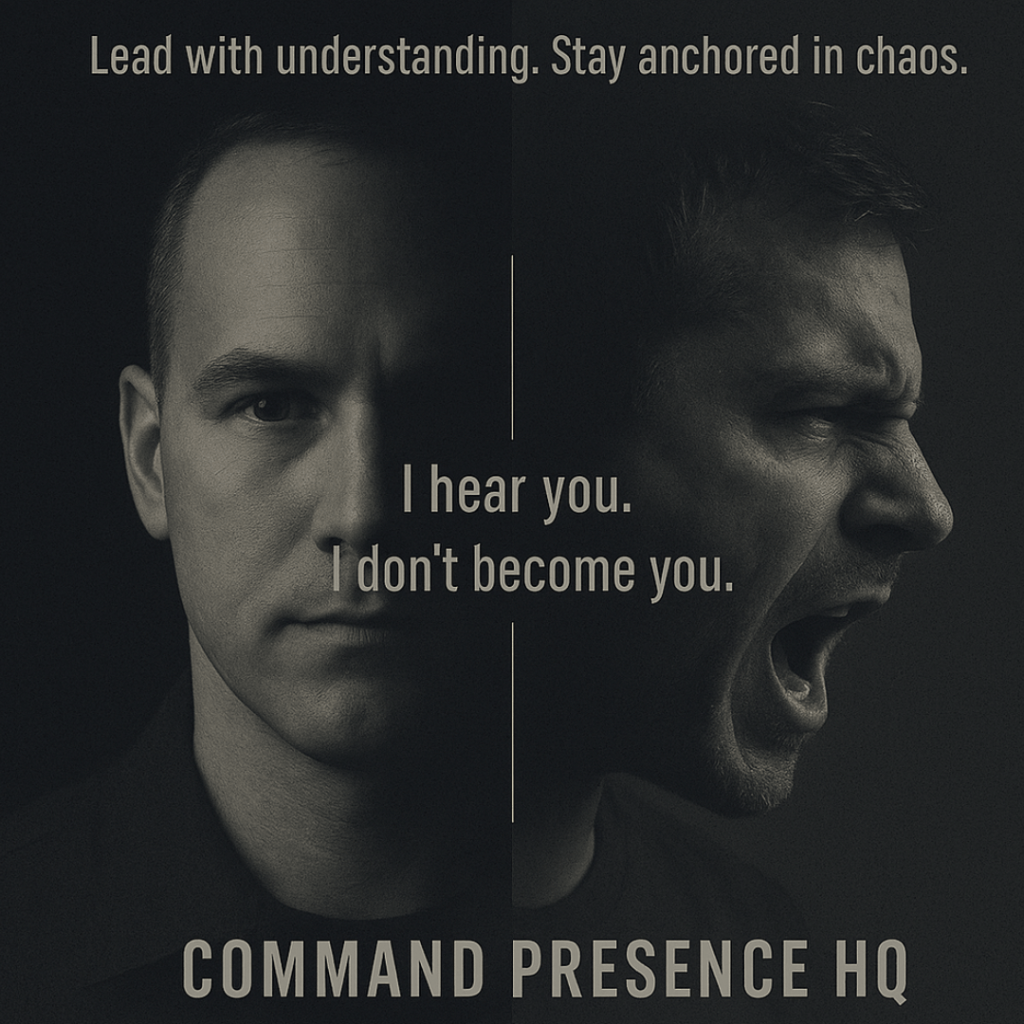
In high-stress situations—whether it’s a tense negotiation, a volatile call for service, or a critical leadership moment—your ability to connect without crumbling is everything.
That’s where Tactical Empathy comes in.
This isn’t about being soft. It’s about being sharp.
What Is Tactical Empathy?
Tactical Empathy is the ability to understand and acknowledge another person’s emotions without absorbing them. It’s the skill of listening with intent, validating without agreeing, and maintaining your internal calm while de-escalating someone else’s chaos.
You don’t give up control. You gain it.
Why It Matters in Command Presence
Command Presence isn’t just about posture or tone. It’s about perception. How people perceive you determines how they respond to you.
When you demonstrate Tactical Empathy, you’re telling the room:
“I hear you. I see what you’re feeling. And I’m still in control.”
That alone can defuse conflict, invite cooperation, and establish trust in moments where brute force or cold logic would fail.
The Three Moves of Tactical Empathy
- Name It to Tame It
- “You seem frustrated.”
- “This sounds personal for you.”
- “I can tell this matters to you.”
- Pause with Purpose
Don’t rush to fix or fight. Let silence do some of the lifting. A calm, thoughtful pause shows you’re processing—not panicking. It shifts the emotional tempo of the conversation. - Mirror Without Mimicking
You don’t need to adopt their energy to show empathy. Mirror their concerns with your words, not their volume. Reflect emotion, but respond with your center. Example: “You feel like nobody’s listening, and that’s adding fuel to everything. I’m here now. Let’s work through it.”
Tactical Empathy ≠ Emotional Surrender
Too often, empathy is seen as weakness in high-stakes roles. But tactical empathy is anything but.
It’s a strength built on:
- Self-regulation
- Situational awareness
- Strategic response over emotional reaction
You don’t let their storm dictate your weather.
Real-World Application
Law Enforcement:
A suspect is escalating. Instead of barking back or shutting down, you acknowledge their anger without endorsing their behavior:
“You’re upset. I get that. But here’s what needs to happen next.”
Leadership:
Your team is stressed and morale is low. You lead by recognizing it:
“I know this week’s been rough. I’ve felt it too. But here’s where we go from here.”
Life:
Even in your own home—Command Presence doesn’t clock out. A calm “I hear you” can often do more than a dozen defensive explanations.
Final Word: Influence Isn’t Force. It’s Resonance.
Tactical Empathy isn’t about making people feel better.
It’s about making them feel heard—so you can lead them from chaos to clarity.
Because presence isn’t just how loud you are.
It’s how deeply you’re felt.
Check out our resources below:
Command Presence: Master Your Energy. Transform Your Impact.
 Being Sanctified
Leave a comment